Vis Ed Blog

Insights on AI integration, enterprise automation, and the future of intelligent systems — from the team that builds them.

All Posts AI Insights Integration Enterprise Government Vis Ed
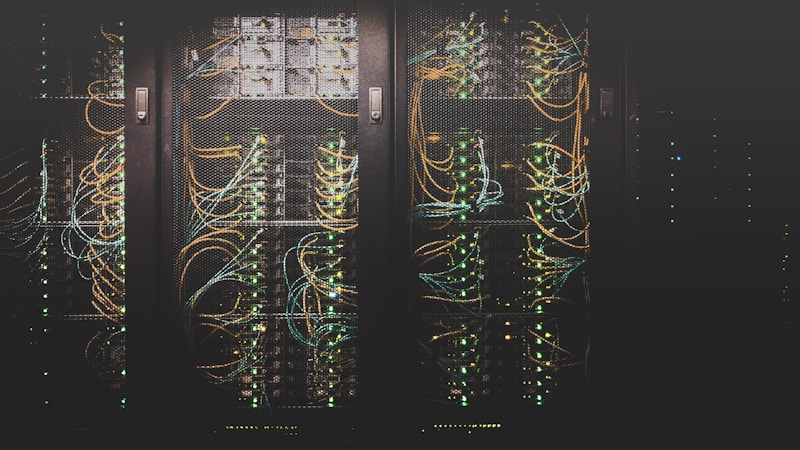
Data center server rack

NVIDIA Launches Rubin Platform: Six New Chips Powering the Next AI Era

NVIDIA unveiled the Rubin platform at CES 2026 — six co-designed chips including the Vera CPU and Rubin GPU that promise up to 10x reduction in inference token cost compared to Blackwell. AWS, Google Cloud, Microsoft, and CoreWeave are among the first to deploy Vera Rubin systems later this year. At Vis Ed, we're already evaluating how Rubin's efficiency gains translate to lower-cost AI integration for our enterprise and government clients — particularly for real-time agentic workloads where inference cost has been the bottleneck.

Source: NVIDIA Newsroom

Network connections

Vis Ed Launches AI-Ready API Gateway for Multi-Model Enterprise Orchestration

Today we're announcing Vis Ed Gateway — our new middleware layer purpose-built for AI workloads. Unlike traditional API gateways, it handles streaming LLM responses, token-based rate limiting, real-time model routing between providers (OpenAI, Anthropic, open-source), and granular cost attribution per department. Designed for organizations running multiple AI models across hybrid infrastructure, Gateway gives CTOs a single control plane for security, compliance, and spend visibility. Available now for enterprise and government clients.

Business analytics

Gartner: 40% of Enterprise Apps Will Have AI Agents by End of 2026

Gartner's latest research predicts that 40% of enterprise applications will feature task-specific AI agents by the end of this year — up from less than 5% in early 2025. The report warns of "agentwashing," where basic AI assistants are mislabeled as autonomous agents. For Vis Ed clients, this validates our integration-first approach: the real challenge isn't building agents, it's connecting them to existing enterprise systems, data pipelines, and governance frameworks so they can deliver value.

Source: Gartner Research
Government building

FedRAMP Is Fast-Tracking AI Cloud Services — What It Means for Federal Agencies

FedRAMP is now prioritizing authorization of AI-based cloud services for federal use, with the new 20x initiative replacing manual point-in-time audits with continuous, automated security validation through Key Security Indicators. The Consolidated Rules 2026 (CR26) launching in May will give vendors a 2.5-year compliance roadmap. For Vis Ed's government clients, this accelerates the path to deploying AI integration platforms inside federal environments — a process that used to take over a year is now targeting months.

Source: FedRAMP.gov / Federal News Network
Circuit board technology

How Vis Ed Connects Legacy COBOL Systems to Modern AI — Without Rewriting Code

Millions of lines of COBOL still power critical government and banking infrastructure. Our middleware translates mainframe output into structured data that AI models can reason over — no legacy code rewrite required. We've deployed this approach across federal agencies running 30+ year-old systems, enabling them to layer AI-powered document processing, automated compliance checks, and predictive analytics on top of infrastructure they thought was stuck in the past. The key insight: you don't need to replace legacy — you need to bridge it.

Data visualization analytics

Enterprise AI Spending Hit $37 Billion in 2025 — And 76% Was on Purchased Solutions

Menlo Ventures' annual report reveals a 3.2x year-over-year jump in enterprise generative AI spending, reaching $37 billion. The most significant shift: 76% of AI use cases are now purchased rather than built in-house, up from 53% in 2024. Coding tools alone captured $4 billion, while the application layer totaled $19 billion. At Vis Ed, this confirms what we tell clients — the ROI of AI comes from integration and deployment expertise, not from trying to build everything from scratch.

Source: Menlo Ventures / TechCrunch
AI technology

NVIDIA's NemoClaw: Open-Source AI Agents Go Enterprise-Grade

NVIDIA is preparing to launch NemoClaw ahead of GTC 2026 — an open-source platform that lets enterprise software companies deploy AI agents for their workforces, regardless of whether they run on NVIDIA hardware. Salesforce, Cisco, Google, Adobe, and CrowdStrike are already on board. This is a big deal for integration: standardized agent tooling means Vis Ed can build orchestration layers that work across agent providers, giving clients vendor flexibility without sacrificing security or observability.

Source: San Jose Today
University classroom

Vis Ed Partners with Universities to Build AI-Powered Academic Integrity Systems

AI-generated content in student submissions is a growing challenge for institutions worldwide. Vis Ed is deploying custom detection pipelines that go beyond surface-level plagiarism checks — analyzing hidden metadata, structural patterns, and writing consistency markers to flag AI-assisted content with higher accuracy. Our approach is transparent and fair: institutions get actionable reports, and students get clear guidelines. We're currently piloting with graduate programs across multiple universities and seeing detection accuracy above 92%.

AI brain visualization

IBM and Deloitte Agree: 2026 Is the Year AI Governance Separates Winners from Losers

Both IBM's AI trends report and Deloitte's State of AI in the Enterprise converge on a key finding: enterprises where senior leadership actively shapes AI governance achieve significantly greater business value than those delegating it to technical teams. Deloitte found that worker access to AI rose 50% in 2025, while IBM predicts this will be the year of "frontier vs. efficient" model classes. The message is clear — governance isn't a roadblock, it's a competitive advantage. Vis Ed builds governance frameworks into every integration we deliver.

Source: IBM Think / Deloitte AI Institute
Team strategy meeting

NVIDIA's 2026 State of AI: 86% of Enterprises Increasing AI Budgets This Year

NVIDIA's annual survey of 3,200+ global respondents confirms the shift from experimentation to production: 86% of companies will increase AI budgets in 2026, with 42% prioritizing workflow optimization over new use cases. Financial services, retail, and healthcare lead in ROI results. Telecom leads agentic AI adoption at 48%. The experimental phase is officially over — and Vis Ed is positioned to help organizations move from pilot to production with reliable, scalable integration infrastructure.

Source: NVIDIA Blog